
The Science Behind Compression Therapy
Do your legs feel like lead at the end of a long day? Whether you’ve been standing for an eight-hour shift or sitting behind a desk, that “heavy” feeling isn’t just fatigue—it’s a sign that your circulation is struggling against gravity.
The Gravity Struggle
Your heart does a great job pumping blood down to your feet, but getting it back up is the hard part. When you are stationary for long periods, blood can “pool” in the lower legs, leading to swelling (edema), achiness, and even the development of spider or varicose veins.
How Compression Works
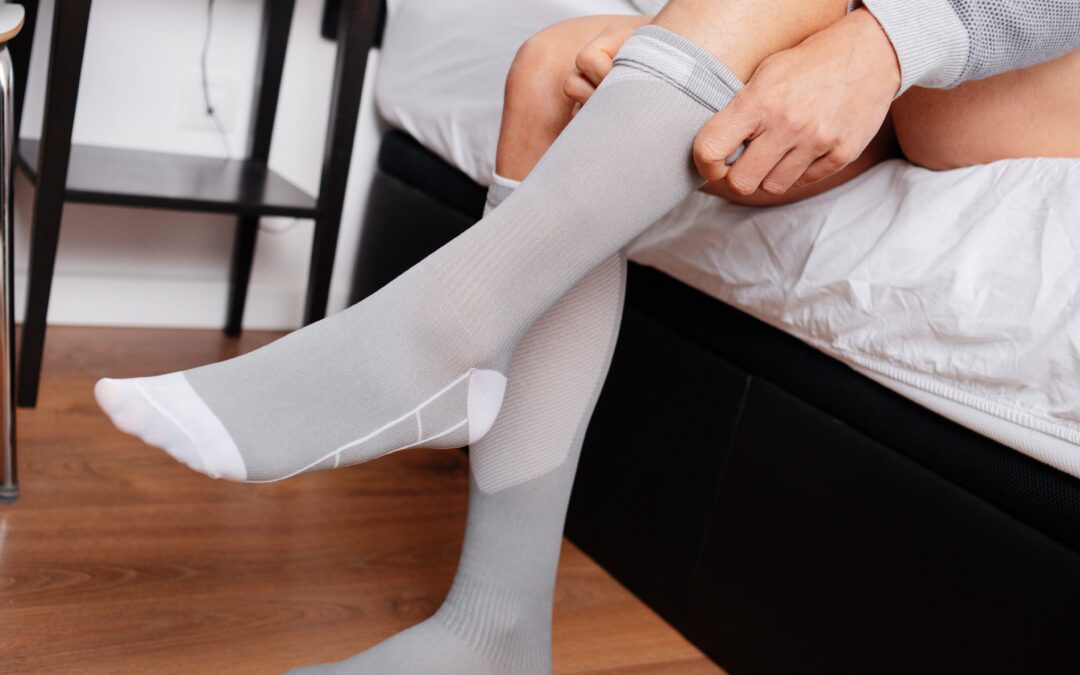
Think of compression socks as a gentle “squeeze” for your veins. By applying graduated pressure—tightest at the ankle and loosening as it moves up—these socks help push blood back toward the heart. This simple mechanism provides several key benefits:
- Reduces Swelling: Prevents fluid buildup in the ankles and feet.
- Boosts Energy: Improved oxygen flow means less muscle fatigue.
- Prevents Complications: Lowers the risk of blood clots (DVT) during long flights or periods of inactivity.
Not Just for the Pharmacy Aisle
Modern compression therapy has evolved. You no longer have to choose between health and style. From high-performance athletic fabrics to professional styles for the office and supportive options for pregnancy, there is a fit for every lifestyle.